Beekeeping-for-beginners

The right tree service, matched to the tree you have, for Longview and Gregg County.

(430) 783-6055

Tree Service in Longview, TX

The Right Tree Service, Matched to the Tree You Have

Not every tree needs the same fix. We look at your loblolly pine, water oak, or storm-split pecan and tell you which service actually solves it, then price it in writing. Serving Longview and Gregg County.

Call (430) 783-6055 Get Matched to a Service

ISA Certified Arborist24/7 storm responseLicensed and insured

Rooted Advice

Beginner friendly answers to the tree questions Longview homeowners ask most.

There is a widespread belief that trees should be pruned in winter, and like most gardening rules it is about sixty percent true. The correct answer depends on the species, on what you are trying to achieve, and on which diseases and insects are active in your region at the time you make the cut. Getting the timing wrong rarely kills a tree outright. It does something quieter: it invites disease, it wastes a year of growth, and in a few specific cases it makes a tree substantially more likely to fail later.

East Texas has a long growing season, mild winters, and a set of pathogens that are active for more of the year than they are further north. That changes the calendar meaningfully, and it is the reason generic advice from a national gardening site frequently gives the wrong month.

The dormant window, and what it is actually for

The core of the traditional advice is sound. Late winter, roughly from the middle of December through February, is the best general window for structural pruning on most deciduous trees. Three things make it good.

The tree is dormant, so it is not spending stored energy on leaves it is about to lose. The canopy is bare, so the structure is visible and a person can actually see which branches are crossing, which are codominant, and where the weight sits. And insect activity is at its lowest, which matters enormously for the oaks.

A homeowner planning any significant structural work, or asking a longview tree service to reduce a canopy or remove major limbs, is generally best served by booking it for this window. The tree responds by pushing vigorous growth in spring directly into the wounds, which is exactly what you want.

Oaks are a special case, and the rule is not optional

Oak wilt is a fungal disease that moves between trees in two ways. Underground, through connected root systems, which is slow and hard to prevent. And above ground, carried by small sap feeding beetles that are attracted to fresh wounds on oak wood.

Those beetles are most active in spring, roughly February through June. A fresh pruning cut on a red oak in April is an open invitation. The disease kills red oaks quickly, sometimes within weeks, and it does not spare live oaks either, though they decline more slowly.

The practical rule is straightforward and worth following without exception:

  • Do not prune oaks between February and June if it can possibly be avoided
  • If storm damage forces a cut during that window, paint the wound immediately with any commercial pruning sealer or even latex paint
  • Never leave freshly cut oak wood stacked and uncovered near living oaks
  • Sterilize saw blades between trees when oak wilt is known to be in the neighborhood

This is one of the few places where wound sealing, which arborists otherwise discourage, is genuinely correct. The rest of the time a sealed wound stays wet and heals slower. On an oak in beetle season, the calculation flips.

Spring flowering trees run on a different clock

Dogwood, redbud, ornamental pear and the spring flowering fruit trees set their flower buds the previous summer. Prune them in January and you are cutting off every flower for the coming spring. Nothing is harmed, but you have removed the entire point of the tree for a year.

The rule for anything that flowers before roughly the middle of May is to prune it in the few weeks immediately after it finishes flowering. That gives the tree the maximum time to set buds for next season.

Trees that flower later in summer, crape myrtle being the obvious local example, set their flowers on new growth, so late winter pruning is correct for them and actually improves flowering.

Crape myrtles deserve their own paragraph

The annual practice of cutting crape myrtles back to knuckled stubs is so widespread that it has a nickname among horticulturists, and none of the nicknames are polite. It is not fatal and the tree will flower, but each cycle produces a thicket of weak, whippy shoots emerging from a swollen knuckle, and those shoots have poor attachment. A mature specimen managed this way never develops the smooth exfoliating trunk that is the best feature of the species.

The alternative takes less work. Remove suckers at the base, remove crossing interior branches, remove anything smaller than a pencil, and take out entire stems at the ground if the clump is too crowded. Leave the framework alone.

Pines and the summer question

Loblolly and shortleaf pine are structurally different from the hardwoods and their pruning needs are minimal. They do not respond to reduction the way an oak or a maple does. Cutting the top out of a pine does not make it shorter in any lasting sense, it makes it a pine with a dead top and a cluster of competing leaders.

The correct pine work is limited to removing dead lower limbs, removing any limb that is genuinely hazardous, and nothing else. The best time is late winter, partly for bark beetle reasons. Pine bark beetles are drawn to stressed and freshly wounded trees during warm months, and a summer pruned pine in a drought year is exactly the tree they find.

Summer pruning has real uses

Not everything belongs in winter. Summer, once growth has hardened off, is the right time for several jobs:

Deadwooding is easiest in leaf, because dead limbs are the ones without leaves and they are obvious from the ground. In winter every limb looks dead.

Clearance work, meaning lifting the canopy off a roof or a driveway, is best judged in summer when the limbs are carrying their full weight of foliage and sitting at their lowest point. A limb pruned to a comfortable height in February will be resting on the roof by June.

Slowing an overly vigorous young tree is a summer job, because pruning in leaf removes stored energy rather than redirecting it.

The rule that matters more than the calendar

However good the timing, the cut itself decides how the tree responds. A proper cut is made just outside the branch collar, the slightly swollen ring of tissue where the limb meets the stem. That collar contains the chemistry the tree uses to seal the wound, and cutting flush to the trunk removes it. A flush cut produces a wound the tree cannot close, and it stays open to decay for years.

Cutting too far out is a smaller mistake but still a mistake. A stub left beyond the collar dies back, and the decay works inward.

Large limbs need three cuts rather than one. An undercut a foot out, a top cut slightly further out to drop the weight, then a final cut at the collar on a stub that has nothing left to tear. Skipping this is how a falling limb strips a yard long ribbon of bark down the trunk.

How much to take

The general guideline is that no more than a quarter of the living canopy should come off in one year, and mature trees should get considerably less than that. Leaves are how the tree earns a living. Removing too many at once puts it into deficit, and the response is a flush of weak watersprouts as the tree tries to rebuild photosynthetic area in a hurry.

There is no horticultural justification for topping a tree, ever. It creates decay columns at every cut, produces weakly attached regrowth, and leaves a tree that is more likely to fail in ten years than the one you started with.

A calendar you can work to

Late winter, from December to February, is for structural work on most deciduous trees, for crape myrtles, and for pines.

Spring, after flowering, is for dogwood, redbud, and the early flowering ornamentals.

February through June is when oaks are left alone.

Summer is for deadwooding, for clearance over roofs and drives, and for restraining young vigorous growth.

Any time at all is correct for a limb that is genuinely dangerous. Safety outranks the calendar, and a limb hanging over a walkway does not get to wait until December.

Most tree problems get solved faster once you know which service they call for. Homeowners around Longview often ask for a removal when a reduction cut would do, or a trim when the tree is already past saving. Here is how to read your own tree before you call, using the same logic our arborists use off Gilmer Road every week.

Start With the Species

East Texas yards run heavy to loblolly and shortleaf pines, post oaks, water oaks, sweetgums, and pecans, and each fails in its own way. Pines are shallow-rooted and uproot in saturated soil, oaks split at co-dominant unions, and sweetgums shed deadwood. Naming the species narrows the likely fix before anyone climbs.

Check the Trunk and Root Collar

Walk to the base and look at the flare where the trunk meets the ground. A mushroom-like conk, a hollow that echoes when you knock, or soil heaving on one side are signs of a tree that is a removal, not a trim. A firm base with sound bark usually means the tree can be kept and managed.

Read the Canopy

Deadwood over a driveway is a pruning job. A crowded canopy blocking the roof is crown thinning or raising. A limb that has grown too long and heavy is a reduction cut. If more than half the crown is dead, though, the tree has told you it is done, and our tree removal crew is the right call.

Look for Weak Unions

Two trunks growing from one point with bark pinched between them, called included bark, is a classic split risk. A steel cable and bracing rods can hold that union together for years. This is where cabling saves a tree that a homeowner assumed had to come down.

When in Doubt, Get It Assessed

Reading a tree takes practice, and a wrong guess near a house on Estes Parkway is expensive. An ISA Certified Arborist confirms the species, the condition, and the safest method, then prices it in writing. If you are unsure what your tree needs, contact us and we will match the service to the tree.

Call Beekeeping-for-beginners at (430) 783-6055 for a free, no pressure assessment anywhere in Longview and Gregg County.

Matching the Right Service to Your Tree

Start with the tree and its condition, and the correct service usually names itself. Here is how the six things we do most map to the problems East Texas trees actually have.

Tree Removal

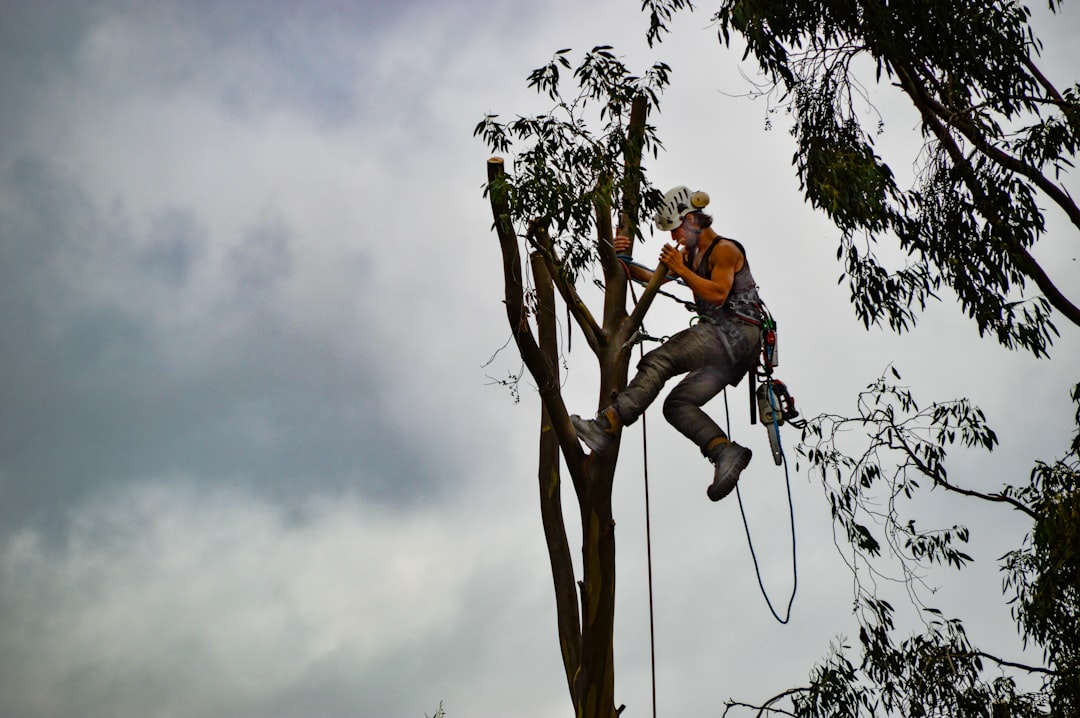
For a dead loblolly pine, a hollow post oak, or a trunk split past saving, we fell and dismantle it, rigging heavy sections down piece by piece when it stands close to the house.

Tree Trimming and Pruning

For a healthy tree with crowding limbs or deadwood, crown thinning, raising, and reduction cut at the branch collar to ANSI A300 keeps it sound and clears the roof.

Stump Grinding

For the leftover stump after a removal, we grind 4 to 12 inches below grade to stop regrowth and the trip hazard, then backfill or haul the grindings.

Cabling and Bracing

For a co-dominant sweetgum or a pecan with included bark, steel EHS cable and threaded rods support the weak union so it does not split in the next ice load.

Emergency Storm Damage

For a tree already on a roof, a drive, or a fence after a Gregg County storm, we respond around the clock and clear the hazard first.

Tree Health Care

For a stressed or declining tree, diagnosis and treatment including deep-root fertilization and trunk injection for pests like emerald ash borer can turn it around.

Beekeeping-for-beginners provides tree service in Longview, TX, and we sort every job by the tree in front of us rather than a one size fits all quote. That means tree removal, crown thinning and deadwooding, stump grinding, cabling and bracing, storm damage cleanup, and plant health care, matched to the species and the shape it is in. A young pecan with a weak fork is a bracing job. A dead loblolly pine leaning over the garage is a rigging job. A double-trunk sweetgum with included bark is a candidate for a cable before it splits. Homeowners near Harrison Road, out toward Pine Tree Road, and across the older canopy in Spring Hill call us because we name the right service instead of defaulting to the saw.

This is a buyer's guide as much as a service page, because the tree problems we see most in East Texas fall into a handful of patterns. Loblolly and shortleaf pines grow tall and shallow-rooted, so they uproot in saturated soil after a spring squall rolls through Gregg County. Post oaks and water oaks hold co-dominant stems that split at the union when a heavy limb loads up with ice. Sweetgums drop deadwood over driveways, and pecans shed large limbs in high wind. Knowing which pattern you are looking at tells you whether the answer is a reduction cut, a support system, or a full removal off McCann Road before the next storm decides for you.

The hardest call a property owner faces is when to remove and when to save, and we treat that honestly. A tree with a firm root plate, a single sound trunk, and a canopy that can be reduced usually stays, because a healthy shade tree is worth real money on a lot near Judson Road. A tree with a hollow base, a fungal conk at the flare, girdling roots, or more than half its crown dead is past saving, and pretending otherwise just delays a hazard. An ISA Certified Arborist walks the trunk, checks the root collar, and gives you the reasoning, not just a verdict. You leave the conversation knowing why a tree earns a cable or a chainsaw.

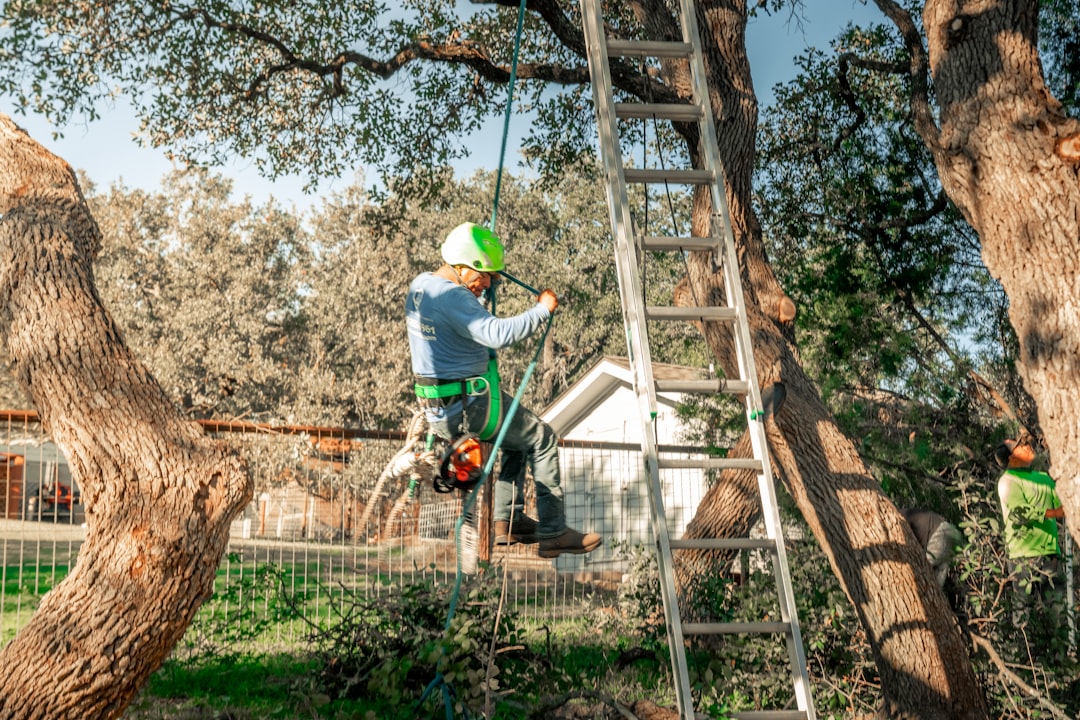
Once the service is matched, the tools, rigging, and materials decide how cleanly it gets done. Our climbers run arborist rope and half-inch double-braid rigging line to lower heavy sections piece by piece near a structure, steel EHS cable and threaded bracing rods for weak unions, and a stump grinder that takes the leftover stump 4 to 12 inches below grade. We cut at the branch collar and skip wound paint, following current ANSI A300 practice, and we work under ANSI Z133 safety rules. Brush goes through the chipper, the wood gets hauled, and the yard on Cotton Street gets raked before we pull away. The right gear on the right tree is the difference between a clean job and a mess left at the curb.

  1. Service matched to the treeWe name the fix that fits your species and its condition, whether that is a reduction cut, a cable, or a full removal.
  2. Remove or save, explainedAn ISA Certified Arborist checks the root collar and trunk and tells you the reasoning behind keeping a tree or taking it down.
  3. Proper rigging and materialsArborist rope, steel EHS cable, and a stump grinder used to ANSI A300 and Z133 standards, not shortcuts.
  4. Storm response, day or nightWe answer 24/7 for uprooted pines, split trunks, and limbs on roofs across Longview and Gregg County.

What Different Tree Jobs Cost

Price follows the tree, not a flat menu. Size, how close it stands to a structure, and whether a crane or heavy rigging is needed all move the number. Stump grinding commonly runs $3 to $5 per inch of diameter, and storm or after-hours calls carry a premium for the response. These ranges are typical for the Longview area, and we put the firm figure in writing after a free on-site look.

Trimming and stump grinding$100 to $1,200Tree removal$300 to $4,000+ per treeEmergency storm response$500 to $5,000+ per job
  • Pruning to ANSI A300 standards
  • Stumps ground below grade
Get matched
  • Small drops to crane-assisted takedowns
  • Wood and brush hauled away
Get matched
  • 24/7 response, day or night
  • Trees cleared off roofs and drives
Get matched

The Longview Area We Serve

We cover Longview and the surrounding Gregg County communities, plus the nearby towns along the US 259 and I-20 corridors. From the mature canopy in Green Acres and Spring Hill to newer lots out past Hawkins Parkway, we match the service to the tree wherever it stands. If a tree is already on the ground, we can usually be out the same day.

  • Longview, TX (75601, 75602, 75603, 75605)
  • Kilgore, TX
  • White Oak, TX
  • Gladewater, TX
  • Hallsville, TX
  • Gilmer, TX
  • Easton, TX

Not sure if your address is in range? Call (430) 783-6055 and we will tell you straight.

A Homeowner's Questions, Answered

How do I know which service my tree actually needs?
It comes down to species and condition. A healthy tree with crowding limbs needs pruning, a weak co-dominant union needs a cable, and a dead or hollow trunk needs removal. An ISA Certified Arborist looks at the root collar, the canopy, and any decay, then names the fix that fits rather than defaulting to a takedown.
How much does it cost to remove a tree in Longview?
It depends on height, trunk diameter, and how close the tree stands to the house or a power line. A small ornamental under 30 feet is a straightforward drop, while a mature pine or post oak may need a crane or piece-by-piece rigging. We give a firm written price after a free look off your address near McCann Road or wherever you are.
Can you save my tree, or does it need to come down?
Often we can save it. A firm root plate, a sound single trunk, and a canopy we can reduce usually mean the tree stays. A hollow base, a fungal conk at the flare, or more than half the crown dead usually means it should come down before it fails on its own.
Do you need a permit to remove a tree on my property?
For a tree on private residential land in Longview, a permit is usually not required, though protected or heritage trees and commercial lots can differ. We help you confirm before we schedule so there are no surprises.
Are you licensed and insured?
Yes. We are a licensed and insured local company carrying general liability and workers coverage, and we are glad to send our certificate of insurance before the crew arrives at your address on Airline Road or anywhere in Gregg County.
Do you grind the stump, or is that separate?
Grinding is often quoted separately, priced around $3 to $5 per inch of stump diameter. We tell you upfront on the estimate whether the stump is folded into your removal price or billed on its own.
How fast can you reach a fallen or storm-damaged tree?
We answer 24/7, and for a tree on a roof or blocking a driveway in Longview we can usually be out the same day. Call (430) 783-6055 and describe the hazard so we bring the right rigging and gear.
What do you do with the wood and debris?
Brush goes through the chipper, and we haul the wood off unless you want it kept for firewood. We rake the work area on Fourth Street or wherever the job is before we leave, so you are not left with a pile at the curb.
When is the best time to trim my trees?
Late winter dormancy is ideal for most East Texas shade trees, but hazard limbs and storm damage get handled any time of year. We avoid pruning oaks during the high-risk oak wilt window when we can, which protects the tree long term.

Get Matched With the Right Service

Tell us what you are seeing, a leaning pine, a split fork, a dead limb over the driveway, or a tree the last storm loosened, and we will walk your property, name the service that actually fixes it, and put a clear price in writing. For a tree already on the ground, we respond day or night across Longview and Gregg County.